


Connecting People – A Lighting Philosophy That Highlights the Built Environment
Light plays a crucial role in creating engaging environments, helping us enhance our living experiences.
For me, people and art connecting humans with their surroundings through light are two indispensable elements in designing architectural lighting solutions. Architectural lighting becomes meaningless without the presence of people. Light creates environments that offer people diverse experiences, and conversely, people also arrange and interact with light across different experiential settings.
“A perfect lighting solution needs to be designed based on the surrounding context so that the main character—the human—can immerse themselves in the space and its atmosphere.”
Based on the concept of the interaction between light and people, this article discusses “Connecting People” — a concept, idea, and philosophy that has become a cornerstone in the careers of both DJCoalition and myself, as an architectural lighting designer.
Human
I began my career in lighting design at a time when there were no specialists working in this field in Australia. Therefore, the most important task for me back then was to identify the key factors necessary in lighting design work. The transition from working as an architect to becoming a lighting designer helped me realize that the human element is the key to creating a built environment that works for both architecture and lighting. From there, placing people at the center has become a core value in my journey of designing lighting solutions.
By “people” in the phrase “Human-Centered Connection,” I am specifically referring to the needs, desires, and experiences of the individuals who intentionally or unintentionally interact with a particular space.
In recent years, thanks to the influence of media, experts, and public discussions, there has been more dialogue around the concept of human-centered lighting design. The idea of Human-Centered Connection intersects with these principles, aiming to provide guidance and practical approaches in lighting design to meet expectations regarding human sensory perception, emotional responses, and physiological well-being.
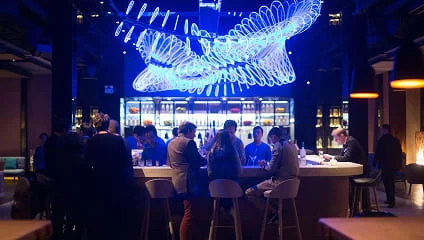
The Nest—one of DJCoalition’s projects in Shanghai—is a representative example. One could say that the story behind The Nest reflects our ambition to create an “island” in the heart of the bustling city. Our concept for the lighting design at The Nest was to create effects that could visually convey this narrative as directly as possible. In the hotel bar, we installed a central decorative lighting system inspired by a series of still images capturing a flying swallow. The shape of the light beams was designed to resemble the wings of the flapping bird, immersing everyone in an atmosphere reminiscent of being on an island.

The lighting at The Nest is soft and gentle during the day and becomes more dynamic as activities pick up, from changes in color to movement. This evokes the image of flying birds and adds vitality to the surrounding environment. We designed the lighting this way with the intention of nurturing both the emotions and mental well-being of every guest who visits The Nest. Lighting design is a creative process that must consider ways to evoke emotion through light. This process revolves around asking the question, “What is emotion?”—focusing on the perceiving subject, and then continuing with, “How can we evoke emotion in the subject?” Light affects people and their emotions directly through visual perception. Based on this understanding, I concluded that lighting design should aim to create and shape emotion.
For The Nest, as with any other project, DJ Coalition always prioritizes human factors, mental health, and emotional experience. We strive to ensure high-quality visual performance, crafting visual experiences that are both aesthetically pleasing and soothing, supporting happiness and well-being through lighting design.
Each project tells its own story, using imagery and contextual intent conveyed through light. As I mentioned before, a perfect lighting solution must be built around its surroundings so that the “main character”—the human—can fully immerse themselves in the space and atmosphere.
DJ Coalition pays close attention to how people respond to light: how they perceive it, how it influences them, and how it shapes their experience. Based on these three dimensions, we can begin to construct a unique, human-centered connection with the environment through lighting.
Promoting engagement
Lighting design solutions are not only intended to highlight architectural spaces but also aim to enhance interaction between architectural environments, transforming them into places of exchange and sources of new ideas. Light acts as the connecting thread between people and themselves, between people and others, as well as between people and their surroundings.
One of the key roles of a lighting system is to support people’s subjective experiences. In other words, lighting designers pay close attention to how individuals connect with themselves and the space around them. For personal connection, light can be a tool that helps people accomplish their intentions within a specific environment. Beyond illuminating spaces, light also creates a sense of satisfaction for everyone within the lit area. Functional lighting, for example, is a critical element in fostering these subjective connections. Good functional lighting avoids casting distracting shadows, prevents glare, and provides sufficient illumination to reduce eye strain, allowing users to focus on their tasks in that space. DJCoalition had the opportunity to design the lighting system for the Perth Library—a project we are proud of. In this quiet and private environment, lighting helps people find what they need, guides movement between floors, and creates a calm, pleasant atmosphere. This illustrates how light influences interaction between people and their surroundings.
Attention must also be paid to shared experiences, especially in public spaces where people interact with one another. Lighting narrows the perceived distance between individuals and their environment by evoking moods and shaping the surrounding atmosphere. Coexistence is dynamic yet stable among people. Therefore, lighting systems should be arranged to ensure everyone can interact harmoniously. Ambient lighting transforms a space into a communal area that encourages connection and allows individuals to comfortably express themselves. For example, Glowfish Office—a shared workspace in Thailand designed by DJCoalition—required a lighting solution that addressed both visual and functional needs while fostering interaction among the employees. Effective lighting in a space not only supports direct interactions between individuals but also indirect interactions, such as orientation and movement. We recognized the importance of lighting when considering the bigger picture of how people connect and interact within a space.
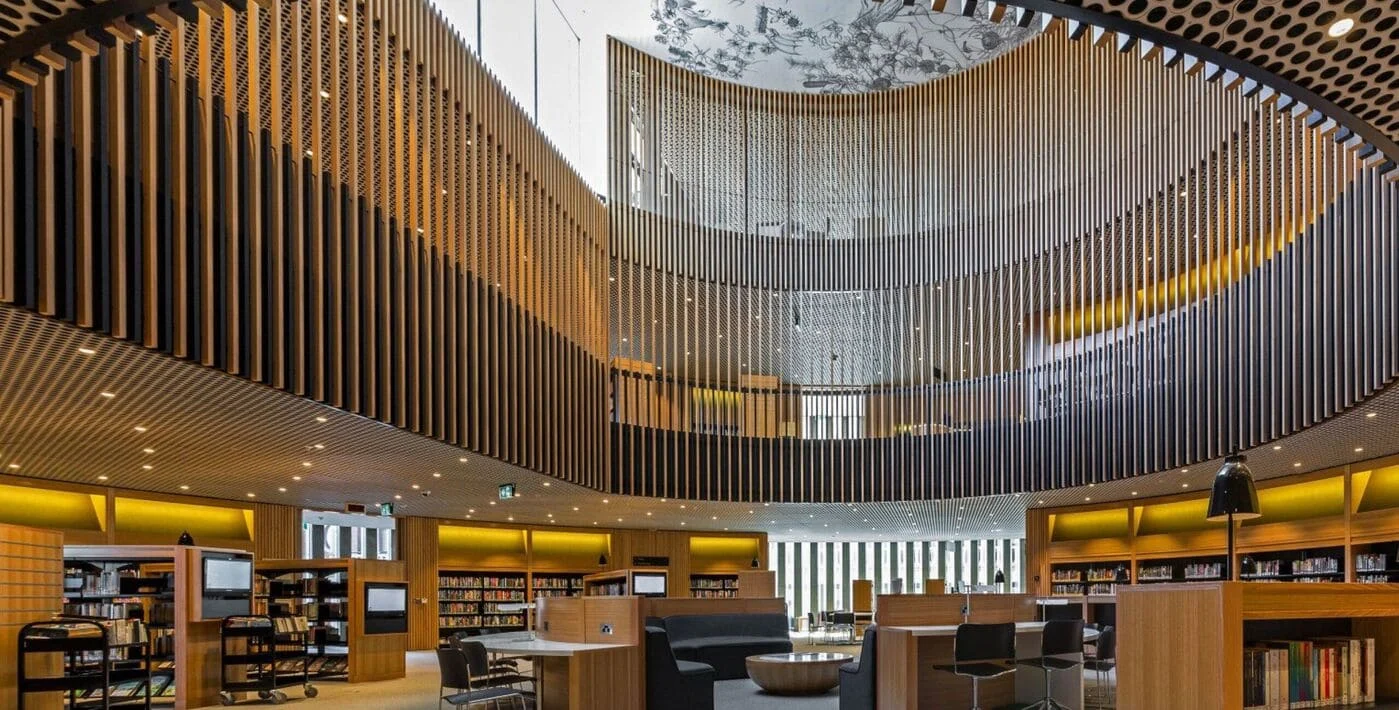
Ultimately, humans cannot be separated from the environment and the spaces around them. Living in harmony with the natural environment is the key to nurturing human well-being, and light serves as the connecting element between us and our surroundings. We must understand that sustainable development is not limited to energy conservation alone. Professionals working in the field of lighting are concerned with artificial light and its impact on natural ecosystems. It is true that it takes time to fully understand light pollution and its adverse effects on wildlife, but that is not a reason to ignore the issue. Humans exist within nature, and lighting for human health is inherently lighting for environmental health as well. Lighting designers need to pay particular attention to the link between human well-being and nature, rather than focusing on one side alone.
Expanding the Concept
In the past, the lighting industry focused primarily on human vision, paying attention mainly to traditional factors such as lighting quality. Although today many concepts and approaches related to human-centric lighting have emerged to meet the industry’s demands, does labeling this idea as “human-centric” truly capture all its aspects and essence? At its highest level, human-centric lighting solutions consider both the visual and non-visual effects of light to generate more positive outcomes for people. Yet, lighting designs still rely heavily on human vision and standard requirements like luminance. I believe, however, that considering human experience and connection should take precedence when designing and developing lighting technologies. Through the lens of Human Connection, designers can convey stories and strengthen bonds through light.
Since entering the profession, Human Connection has felt like an intuition—a vague concept that I unconsciously incorporated into my designs. As my career progressed and the lighting industry evolved, the increasing presence of experts offered me numerous opportunities to learn from diverse perspectives. It took me a long time to refine the concept of Human Connection and identify its related elements, and even longer to learn how to communicate and articulate this concept with our design team at DJCoalition. After years of dedicated experimentation—not only with light, space, and its effects on people but also with how individuals perceive spaces, interact within them, and how our designs impact environmental health—our team has come to regard Human Connection as the core of every design we create.

In summary, whether in public spaces, commercial areas, transportation hubs, or even the confines of our small homes, light affects human lifestyles, perception, thinking, and interaction. Looking further afield, we can see that light not only connects people with space but also influences environmental, social, and internal connections. To ultimately achieve Human Connection, we all need to cultivate a deeper understanding. High-quality lighting design should not be limited to commercial benefits alone. Efforts to create high-quality lighting designs contribute greater value to individuals, communities, and the environment. Lighting is a field that continues to evolve, and my message to the next generation of young professionals is not to simply follow in the footsteps of those before you. Instead, I hope to connect with you through the concept of Human Connection in lighting and to consider your contributions as part of the ongoing effort to refine this idea.
Other News
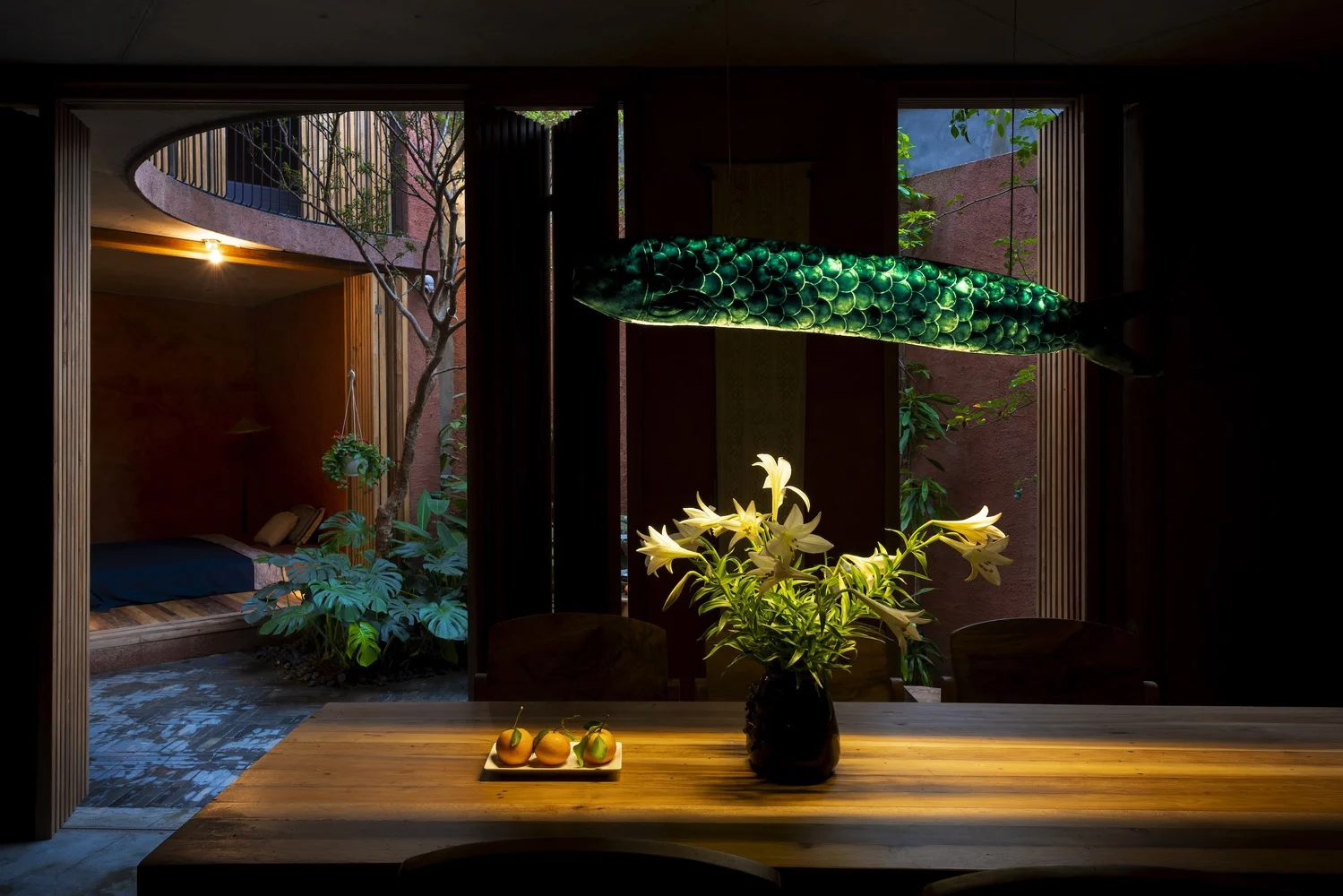
In interior design, lighting is more than just a tool that helps us see. It is a “language of emotion” — quietly shaping mood, perception, and the overall quality of human experience in every moment. Among all lighting specifications, CCT (Correlated Color Temperature) and CRI (Color Rendering Index) are the two core factors that determine […]
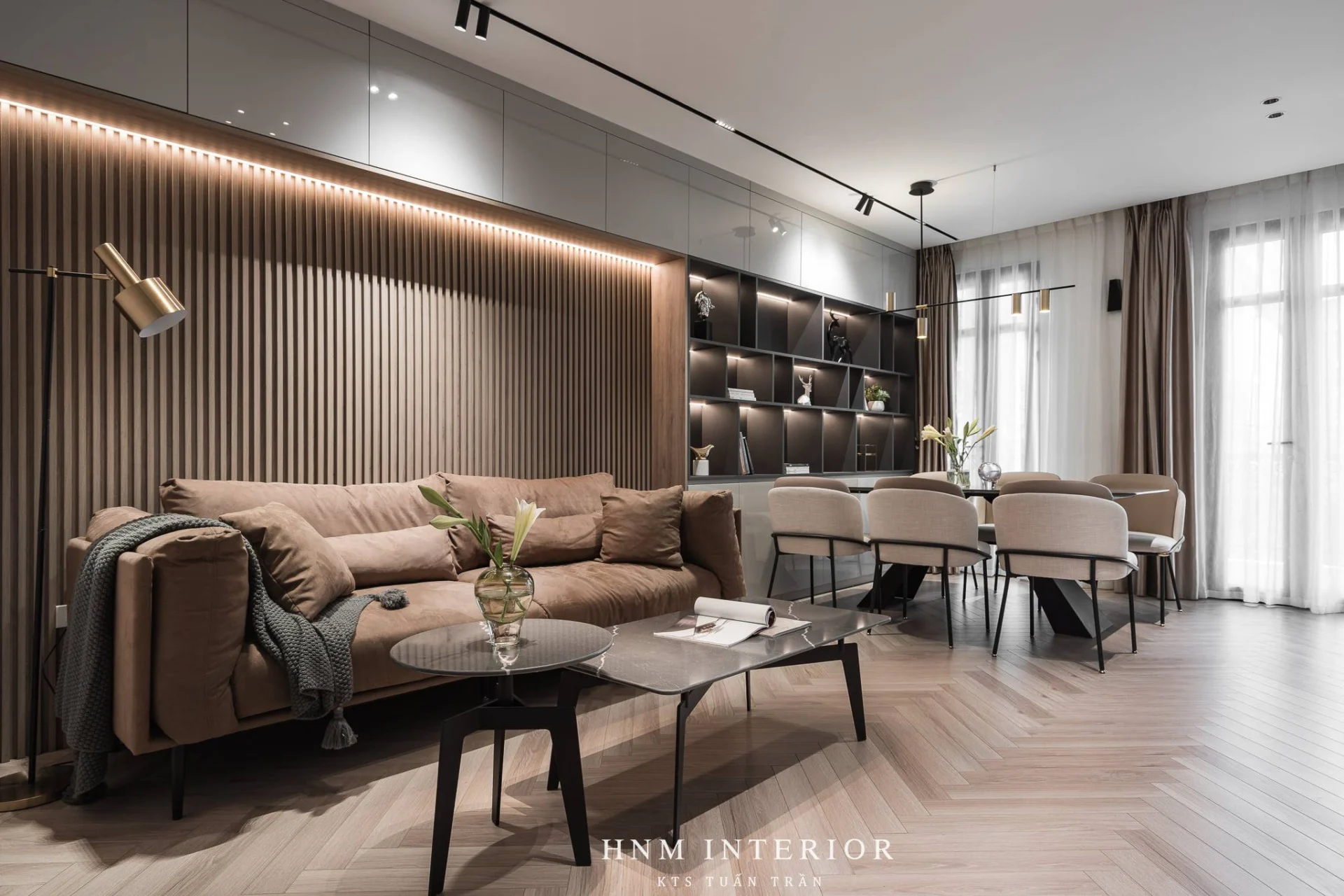
Những năm gần đây, xu hướng sở hữu nhà ở nghỉ dưỡng tránh xa ồn ào nơi phố thị đang ngày càng được ưa chuộng.
In recent years, the trend of owning vacation homes away from the hustle and bustle of the city has become increasingly popular.
This article shares insights from Mr. Damian de Wind, Project Lighting Director at Mondoluce, about the journey of transforming retail lighting methods in the context of shopping centers adopting a customer-centric approach, focusing on people, their needs, and the overall experience.
In recent years, the trend of owning vacation homes away from the hustle and bustle of urban life has become increasingly popular.
In this article, Universal Light is honored to have a conversation with Ms. Fanny Soulard, a lighting designer with extensive experience in the field.
In this article, Universal Light is honored to have a conversation with Ms. Fanny Soulard, a lighting designer with extensive experience in lighting.
In recent years, the trend of owning resort-style homes away from the hustle and bustle of the city has become increasingly popular.
This article shares insights from Mr. Damian de Wind, Project Lighting Director at Mondoluce, about the journey of transforming retail lighting methods in the context of shopping centers adopting a customer-centric approach, focusing on people, their needs, and the overall experience.
Bài viết này trình bày chia sẻ từ ông Damian de Wind, Giám đốc chiếu sáng dự án của Mondoluce, về hành trình chuyển đổi phương pháp chiếu sáng trong bán lẻ giữa bối cảnh các trung tâm mua sắm áp dụng phương pháp chiếu sáng lấy khách hàng làm trung tâm để tập trung vào con người, nhu cầu và trải nghiệm tổng thể.
Light plays an essential role in creating engaging environments, helping us enhance our living experiences.
In recent years, the trend of owning resort-style homes away from the hustle and bustle of the city has become increasingly popular.