

Downlights and Spotlights: How to Choose and Combine Them
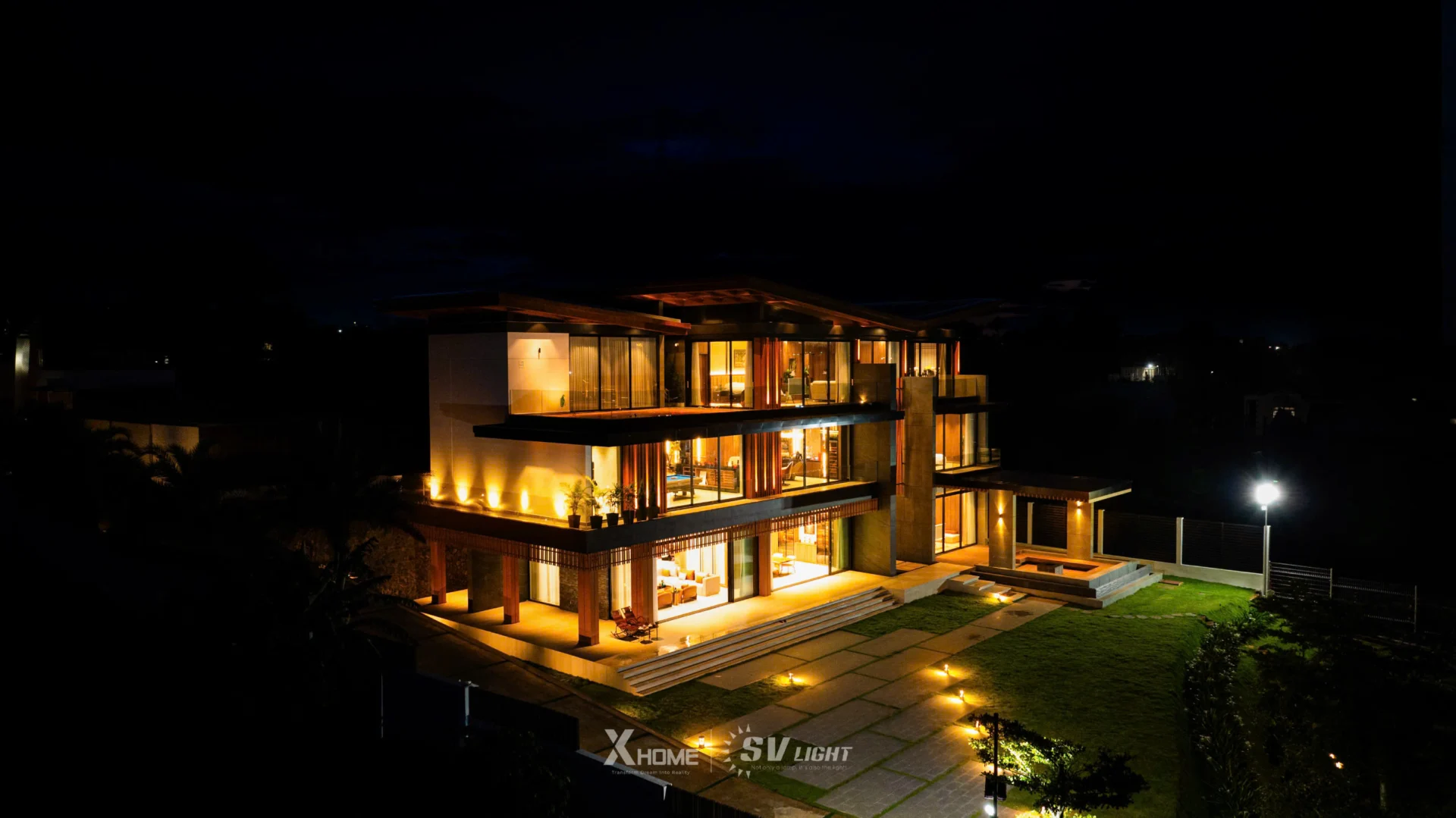
Downlights and spotlights are widely used in interior lighting, but they typically serve different purposes. Downlights provide a base layer of illumination, while spotlights draw attention to artwork, materials and architectural features. This guide focuses on recessed ceiling fittings: both can sit within the same ceiling design, yet their contribution to the room depends on how they distribute light.
Choosing between downlights and spotlights calls for more than a comparison of appearance or wattage. Clients, architects and contractors need to consider how the space will be used, the ceiling height, surface finishes, furniture layout and day-to-day operation. These factors help determine which fittings belong where and how they should work together.
A successful scheme balances useful illumination, visual comfort, control and atmosphere. Adding more fittings does not automatically improve the result, and the right balance of downlights and spotlights varies from one project to another.
How do downlights and spotlights distribute light differently?
The key distinction is the light distribution produced by the optical system. Lenses, reflectors, diffusers and the position of the light source shape the beam and determine how it reaches the surfaces below.
Downlights: establishing a comfortable layer of ambient light
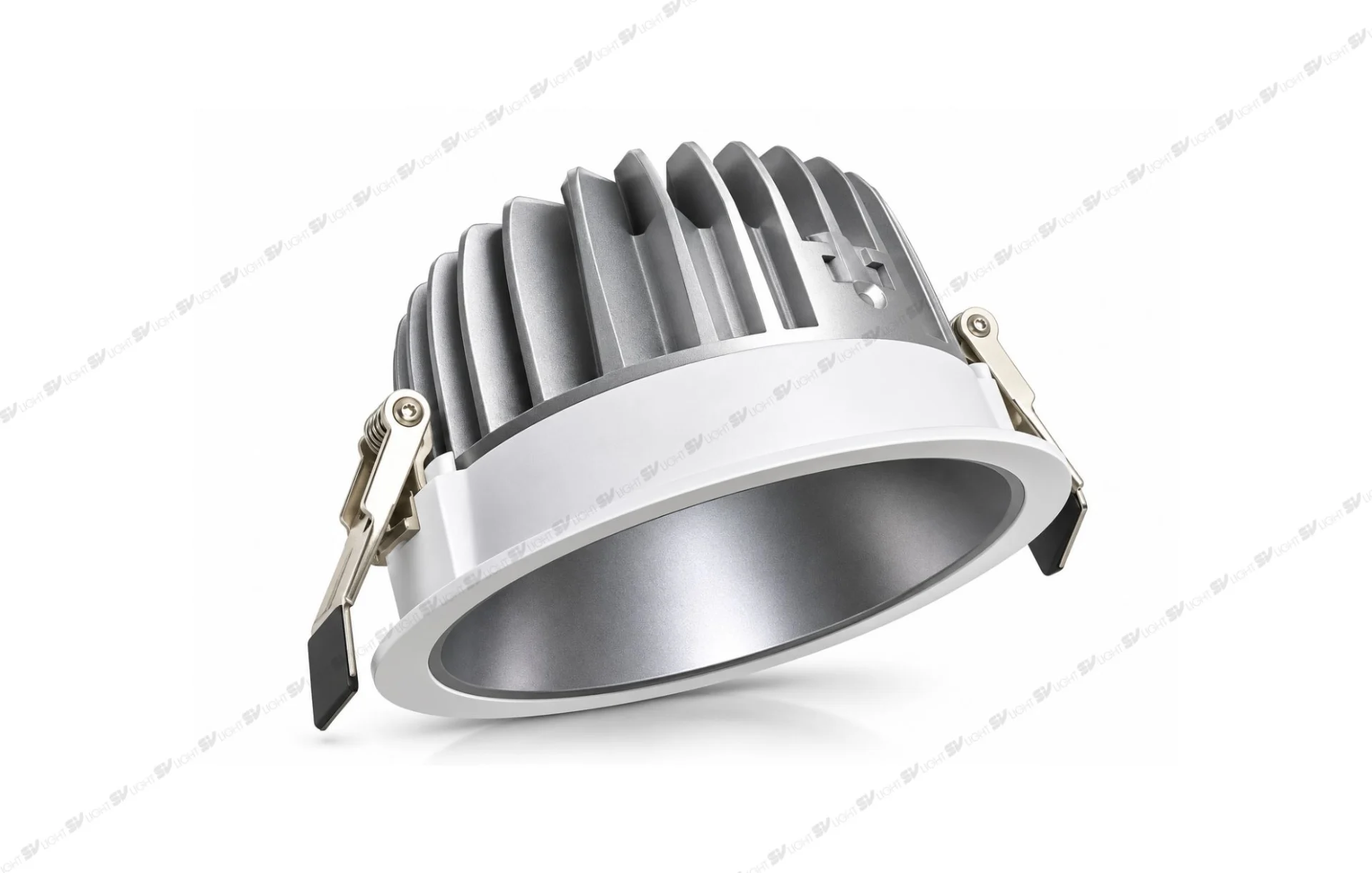
Recessed downlights are often used to illuminate a room or a defined part of it. Relatively broad beams can overlap to provide suitable illuminance on floors, work surfaces and other areas where people need to see clearly.
In a home, this might include hallways, living rooms and shared spaces. In hotels and commercial interiors, ambient lighting also helps people find their way and move comfortably through the building.
Even coverage is not an automatic property of every downlight. It depends on beam angle, lumen output, mounting height, spacing and the reflectance of surrounding surfaces.
Spotlights: directing attention to objects and architectural features
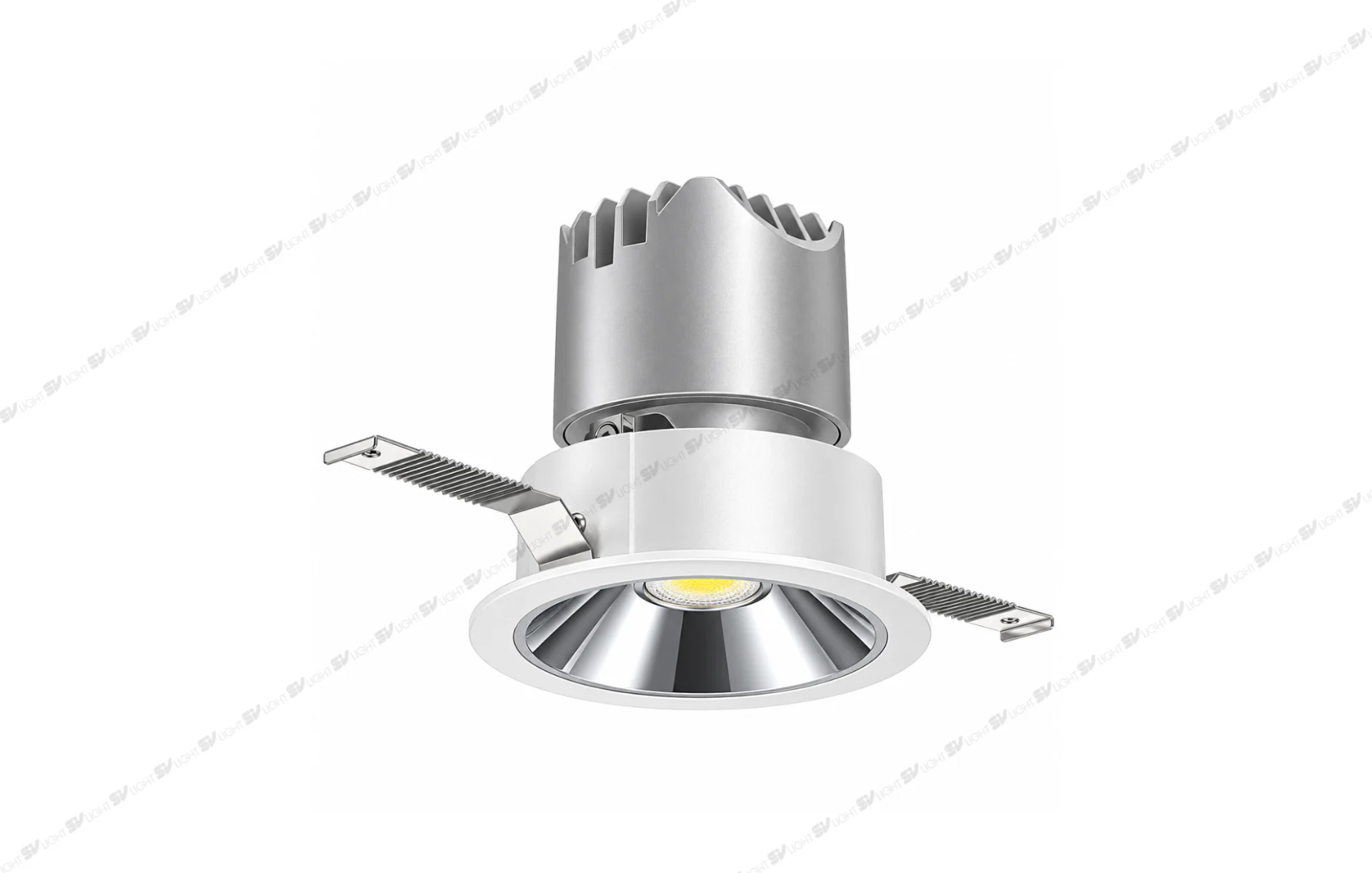
Recessed spotlights offer more focused control over the area being illuminated. Typical applications include artwork, decorative objects, stone feature walls, timber finishes, reception desks and architectural details.
Their value lies in creating deliberate contrast. A painting or display becomes a focal point when the light falling on it is balanced against the brightness of its surroundings.
A narrower beam generally produces a smaller pool of light, while a wider beam covers a larger area. Luminous intensity, distance and aiming direction all affect the final appearance.
Why appearance alone does not tell you how a fitting will perform
Downlights and spotlights are both available in round, square, trimmed and trimless designs. Two fittings may look almost identical from below while producing very different lighting effects.
Compare the photometric data, beam angle, intensity distribution, glare control and aiming adjustment. The size of the visible opening alone is not a reliable way to distinguish a spotlight from a downlight.
Downlights and spotlights: 5 differences to compare
The product category is only a starting point. A useful comparison looks at the characteristics that affect coverage, illuminance, visual comfort and installation.
Light distribution, beam angle and uniformity
Downlights are commonly used for broad ambient coverage, while spotlights are often chosen to define a smaller area or direct light towards a particular object. The actual performance still depends on the individual fitting and its optics.
| Design consideration | Downlights | Recessed spotlights |
|---|---|---|
| Typical role | Ambient and general-purpose lighting | Accent and directional lighting |
| Coverage | Often broad, with an emphasis on area coverage | Often more focused, with an emphasis on beam control |
| Uniformity | Can provide even illumination with appropriate spacing | Can create deliberate differences in brightness |
| Aiming adjustment | Varies by model; many are fixed | Available in fixed and adjustable versions |
| Common applications | Living areas, corridors and work areas | Artwork, feature walls, dining tables and displays |
Product references
- SVF-3027 Downlight — 10W with a 90° beam. A reference option when comparing fittings for ambient coverage.
- SVS-1075 Spotlight — 10W or 12W, with 15°, 24°, 36° and 55° beam options. A reference for comparing beam spreads in accent lighting.
At the same distance, a 15° spotlight generally produces a smaller beam footprint than a 36° model. For a conical beam aimed perpendicular to a flat surface, the approximate beam diameter is:
D ≈ 2 × L × tan(θ/2)
Here, L is the distance from the light source to the surface, and θ is the full beam angle. At a distance of 2 m, the calculated diameter is approximately 0.53 m for a 15° beam and 1.30 m for a 36° beam.
This is a geometric estimate, not a guarantee of a sharply defined pool of light. The visible result depends on the optics, intensity distribution and receiving surface. Check the photometric data for the exact fitting being specified.
Lumen output, luminance, colour rendering and colour temperature
Luminous flux, measured in lumens, describes the light output of a source or fitting. It does not, by itself, tell you how much light will reach a desk, floor or display. Distribution and distance also matter.
Luminance relates to the brightness of a source or surface as seen from a particular direction. A fitting with appropriate lumen output can still cause discomfort if its bright source is visible or reflected in glass, polished stone or metal.
The colour rendering index (CRI) describes how faithfully a light source renders colours relative to a reference source. Colour quality deserves particular attention where timber, natural stone, artwork or merchandise is central to the design.
Correlated colour temperature (CCT) influences the character of a space. Warm light is often considered for relaxing and social settings, while a more neutral appearance may suit other activities. Make the choice in relation to the room’s purpose, finishes and daylight conditions.
For more on reading lighting specifications, see the Energy Rating programme’s guide to choosing the right lamp, which explains how lumen output, colour temperature and beam angle inform product selection.
Aiming adjustment, glare control and installation requirements
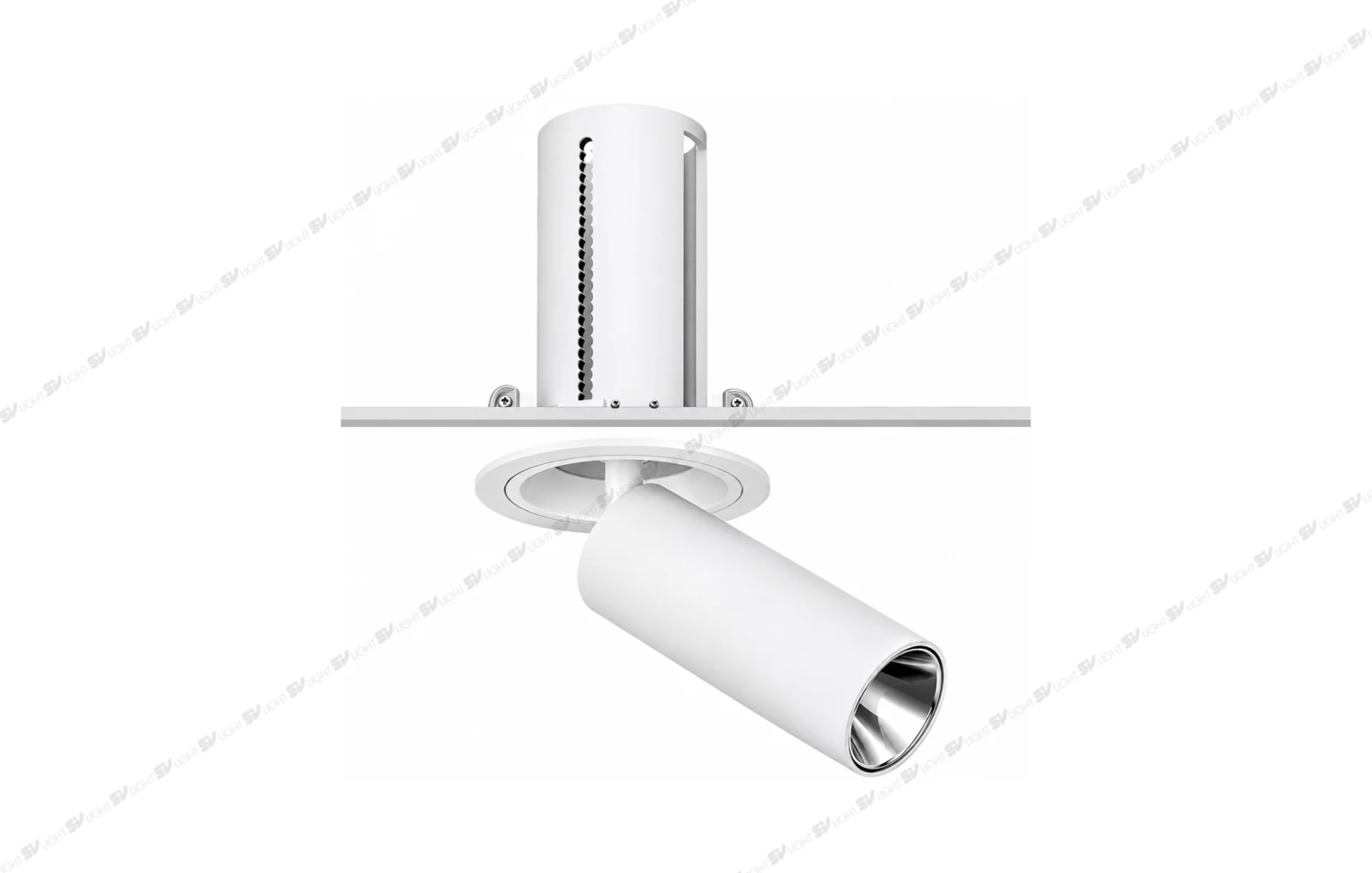
Beam angle and aiming adjustment are different specifications. Beam angle describes the spread of light; aiming adjustment describes how far the fitting can tilt or rotate. A 24° beam does not mean the fitting can tilt through 24°.
Assess glare control through the reflector design, the recess depth of the light source, optical accessories and likely viewing positions. Reflective finishes can create glare even when the source itself is outside the viewer’s direct line of sight.
Before installation, confirm the ceiling cut-out, available recess depth, heat dissipation requirements, driver location and access for maintenance. A fitting that delivers the right light may still be unsuitable for the ceiling construction.
Adjustable spotlight reference
SVS-T0755 Adjustable Spotlight — 5W, with 15°, 24°, 38° and 50° beam options. Confirm the mechanical aiming range separately for the selected configuration.
When should you combine downlights and spotlights?
Some spaces work well with downlights alone or with downlights and indirect lighting. Others, particularly display areas, may rely more heavily on spotlights. Combining both makes sense when the room needs a comfortable base level of light as well as clearly defined focal points.
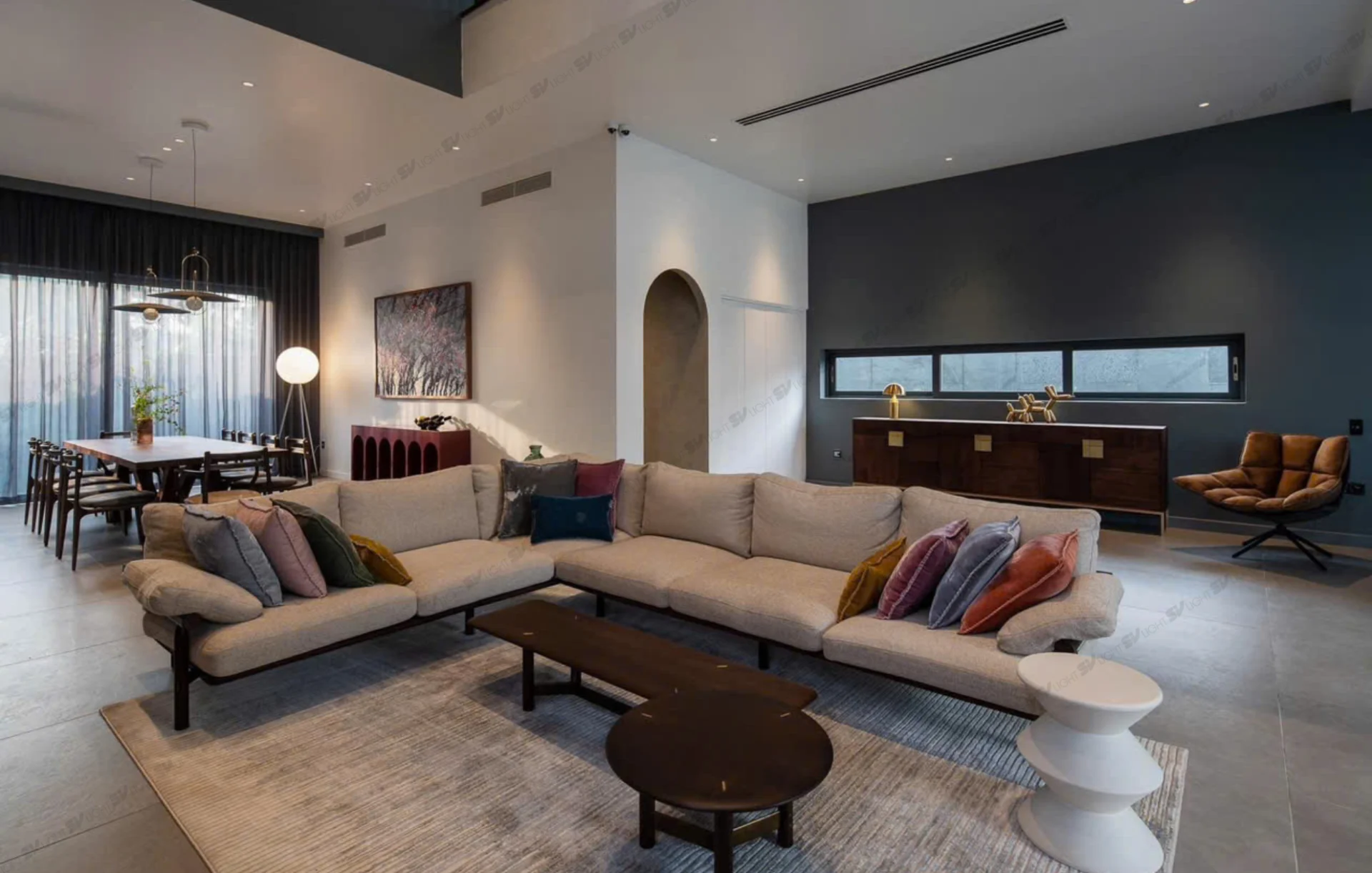
Apartments and villas: combining ambient light with accents on materials and art
In residential interiors, downlights and spotlights can form complementary layers. Downlights support everyday activities, conversation and circulation. Spotlights can then bring attention to paintings, natural stone, timber features or sculpture.
Select the focal points carefully. Lighting every decorative surface to the same intensity can leave the room without a clear visual focus. Consider what people see from the sofa, around the coffee table and as they enter.
In bedrooms and TV areas, check reflections in screens and mirrors, as well as direct views of the light source. Separate control groups allow residents to adjust the lighting for different activities and times of day.
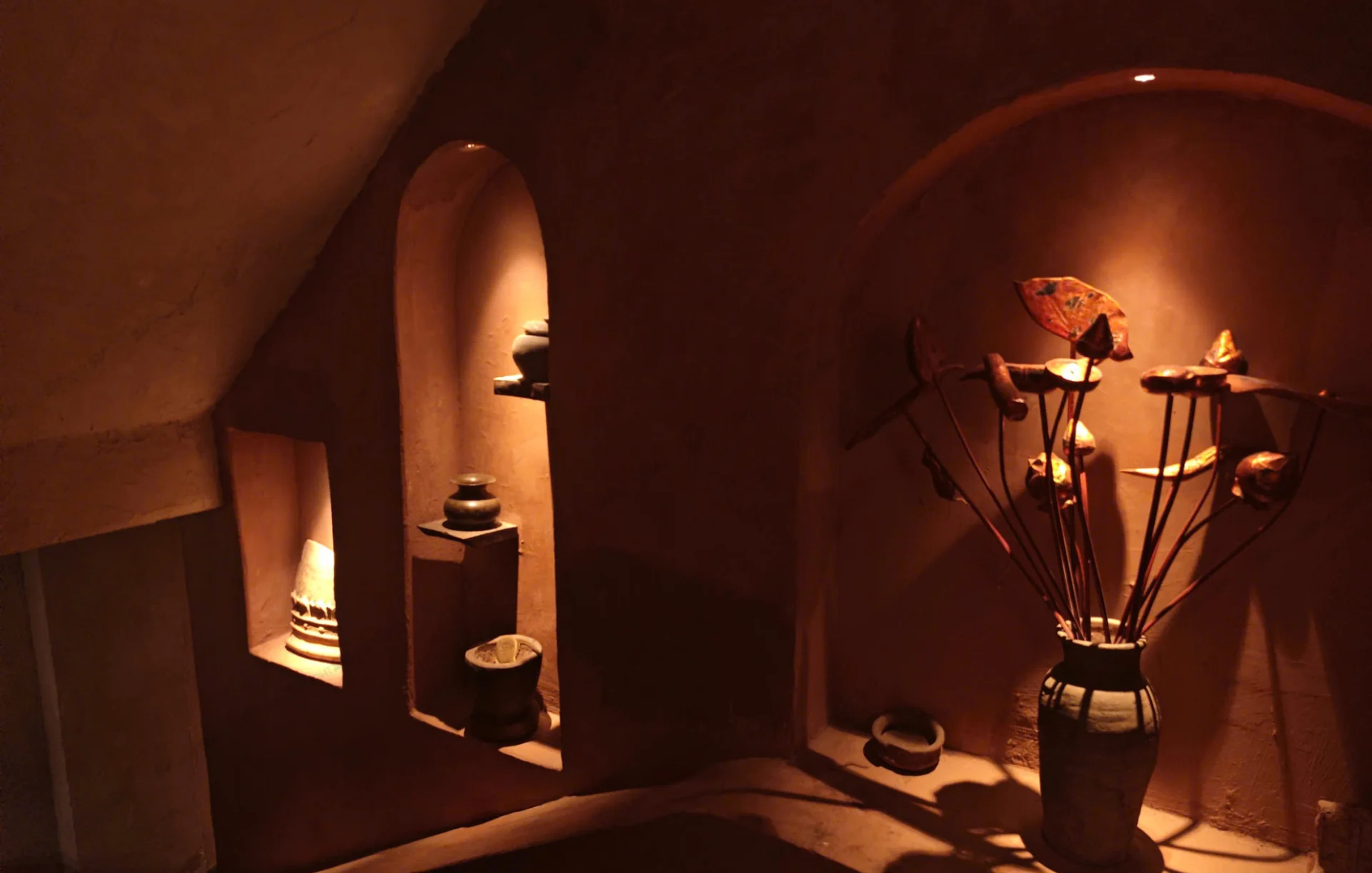
Hotels: balancing guest comfort, a sense of place and efficient operation
A hotel scheme using downlights and spotlights needs to support the guest experience, reinforce the architecture and remain practical to operate. Downlights are often considered for corridors, circulation routes and areas that need consistent illumination.
Spotlights can highlight reception features, signage, artwork and distinctive architectural details. Avoid creating uncomfortable bright spots where guests or staff will stand or work for extended periods.
For properties operating around the clock, energy performance, service life, replaceable drivers, dimming and maintenance access are all part of the selection process.
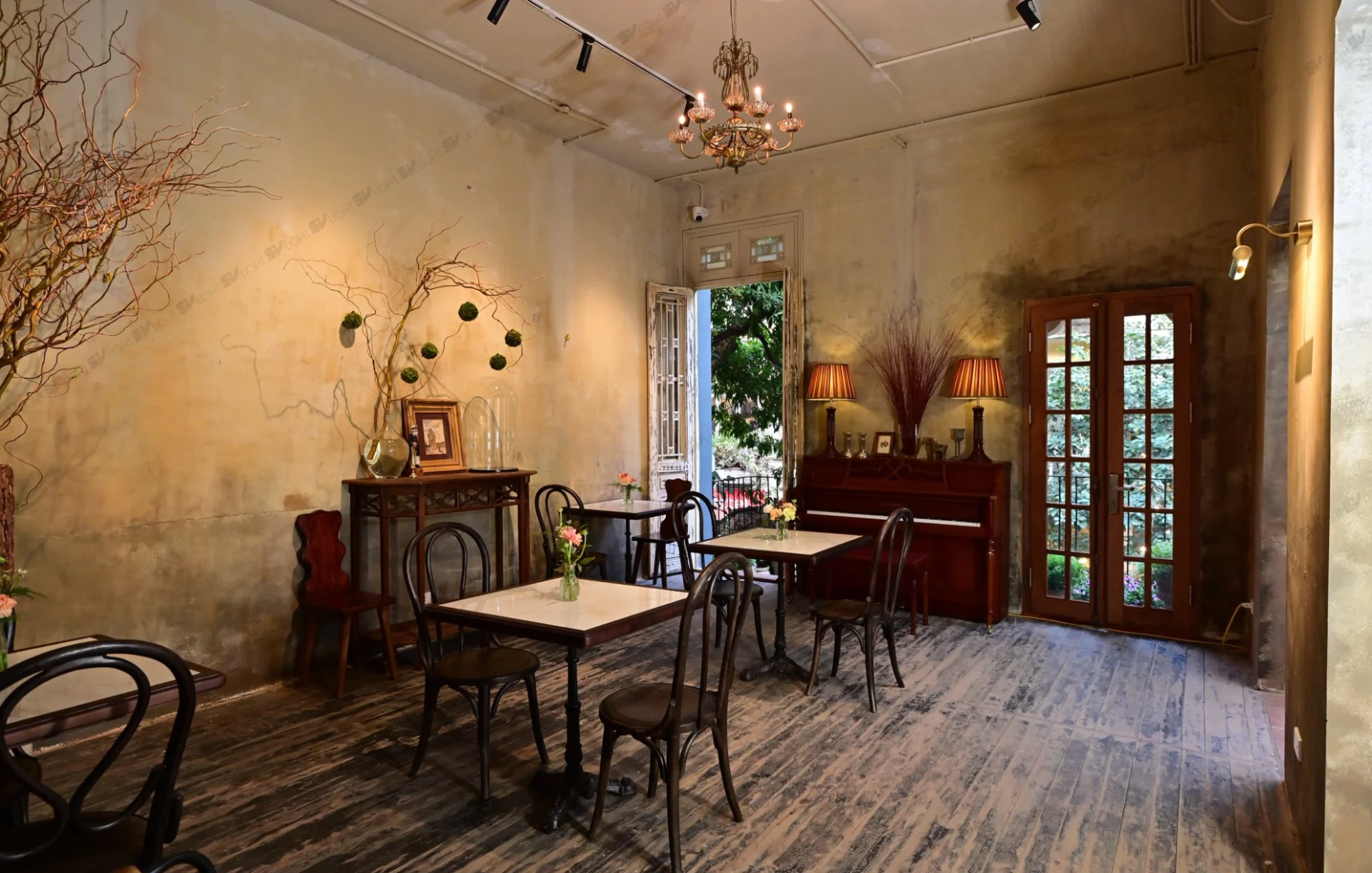
Restaurants: layering light across tables, walkways and decorative features
Restaurant lighting should make food easy to see, support safe movement and establish the intended atmosphere. Downlights can provide ambient illumination along walkways, in service areas and wherever consistent visibility is needed.
Spotlights can define dining tables or draw attention to selected walls and architectural details. When lighting a table, check the mounting height, seating positions and sightlines to limit direct glare for diners.
Adjustable recessed spotlights can be useful where table layouts change. When combining downlights and spotlights, consider their control groups alongside the restaurant’s operating needs. Confirm that adjustable fittings have enough aiming range for the proposed layouts. Always coordinate the lighting positions with the furniture plan.
A practical approach to planning the lighting in a room
Consider a living room with a sofa, coffee table, feature wall and artwork. Start with how the room will be used and which surfaces need light. Select downlights and spotlights for those tasks, then determine how many recessed fittings are needed.
Identify the main activities and focal points
List the activities the room needs to support: entertaining, relaxing, reading, watching TV and moving through the space. Each may call for a different light level, direction or control setting.
Next, mark the features that deserve emphasis, such as a painting, stone wall or decorative object. Consider their dimensions, position, reflectance and the angles from which people will view them.
Daylight, ceiling and wall colours, flooring and glossy finishes also influence the result. Review these together so the lighting scheme responds to the finished room.
Select fittings for each zone before deciding on quantities
Use the furniture layout to identify areas that need ambient light, areas that need accent light and areas where direct illumination may be unnecessary. Downlights can serve the general living zone, with spotlights assigned to selected artwork or materials.
Then compare photometric data, lumen output, beam angles and mounting distances to develop the specification. Where tighter performance control is needed, support the layout with lighting calculations or simulation using suitable product data.
The final quantity of downlights and spotlights should reflect the design objectives. Extra fittings may add little value if their beams overlap without purpose or make every surface equally prominent.
Check glare, shadows and beam overlap
Review the scheme from key positions: the doorway, sofa, dining table and main circulation routes. For artwork behind glass, check reflections as well as the risk of a spotlight shining towards someone facing it.
Consider shadows in relation to people and furniture. Poorly positioned fittings can cast a person’s head or hand shadow over a task, or direct the brightest part of the beam away from the intended surface.
Beam overlap can be useful for ambient lighting because it helps achieve even coverage. In accent lighting, excessive overlap can reduce contrast and weaken the focal points.
Before finalising the lighting layout
- Confirm the main activities and where people will sit, stand and move.
- Define the ambient coverage and the features that need accent lighting.
- Check fitting positions against furniture, artwork and decorative objects.
- Review glare, shadows and reflections from surface finishes.
- Confirm control groups and access for maintenance.
Common mistakes when combining downlights and spotlights
Choosing by wattage without checking light output and optics
Wattage describes electrical power consumption. It does not tell you how much light will reach a surface. Two fittings with the same wattage may differ in lumen output, luminous efficacy and intensity distribution.
For spotlights, review beam angle and directional intensity data. For downlights, assess coverage and uniformity. Choosing on wattage alone can leave a space underlit, overlit or in need of changes after installation.
Adding too many bright points without a clear visual hierarchy
A ceiling crowded with fittings can still produce an unbalanced room. When ambient and accent lighting make every surface equally bright, individual features lose their impact and the space can feel flat.
Decide which areas need comfortable functional light, which should attract attention and which can remain quieter. Controlled contrast can give a room depth without raising the light level everywhere.
Finalising the lighting before checking furniture and sightlines
A common coordination problem is completing the lighting layout before the furniture arrangement is settled. If tables, cabinets or artwork move, the beams may miss their targets or create unwanted shadows.
Review the reflected ceiling plan alongside furniture plans, sections and mounting heights. Where practical, use an on-site mock-up to assess glare, viewing angles and the actual lighting effect before completing the installation.
What to prepare for a lighting consultation with SVLight
A clear project brief makes it easier to assess suitable downlights and spotlights before committing to specific models. Drawings, finish information and a description of the intended lighting effect provide the basis for a useful discussion.
Ceiling plans, mounting heights and the purpose of each area
Provide reflected ceiling plans, furniture layouts, finished ceiling heights and relevant sections. Identify beams, air-conditioning equipment, sprinklers, building services and any constraints within the ceiling void.
Explain how each area will be used, whether for welcoming guests, relaxing, working, displaying products, serving customers or circulation. This helps establish the lighting layers and control groups before fittings are selected.
Material references, furniture details and the intended atmosphere
Interior renderings, material photographs, finish palettes and reference images help communicate the desired result. Draw particular attention to reflective surfaces such as glass, mirrors, polished stone and metal.
For artwork and display objects, include dimensions, proposed positions and the approximate distance from the fitting to the illuminated surface. If furniture or displays will change regularly, explain how much flexibility the scheme needs.
The specifications to confirm before selecting a model
Before specifying downlights and spotlights, compare wattage, lumen output, beam angle, intensity distribution, CRI, colour temperature, glare-control information, fitting dimensions and installation requirements.
Also confirm the IP rating, driver, dimming capability, control compatibility, heat dissipation requirements and maintenance access. Check these against the exact model and configuration being proposed.
Downlights and spotlights can make complementary contributions to the same interior. A considered scheme starts with the people using the space, its layout and the intended atmosphere. A clear relationship between ambient and accent lighting helps bring practical performance, visual comfort and architectural character together.
Discuss your downlight and spotlight requirements with SVLight
Share your floor plans, ceiling heights, material references and lighting brief with SVLight. Our team can help you assess suitable lighting options for your project.
SVLight — CÔNG TY CỔ PHẦN THƯƠNG MẠI SUNSHINE VIỆT NAM
Ho Chi Minh City: 08 B4 Street, An Khánh Ward
Hanoi: 116 Trường Chinh Street, Kim Liên Ward
Phone: +84 985 85 86 98
Email: svlight.vn@gmail.com
Website: www.svlight.vn
Other News
Trimmed and trimless recessed lights are two options commonly considered by architects when designing interior lighting. While trimmed recessed lights create a defined edge where the fixture meets the ceiling, trimless recessed lights provide a seamless, minimalist appearance by reducing visible technical details on the architectural surface. However, choosing between these two types of lighting […]
Interior showroom lighting not only meets the needs of visibility and circulation but also helps highlight the shapes, colors, and materials of individual products. A well-planned lighting system can help customers clearly appreciate sofa upholstery, wood grain, stone surfaces, and important design details. In particular, showrooms frequently change their displayed products according to new collections […]
How to position artwork lighting directly affects how clearly artwork can be viewed and how an interior space is perceived. A beautiful painting can become a focal point in a villa living room, hotel corridor, or exhibition area. However, if the lighting position is unsuitable, it may cast shadows from the frame, create uneven illumination, […]
Color Rendering Index (CRI) is one of the important specifications to consider when selecting LED lighting for interior spaces, especially in areas where accurate color appearance is essential, such as artwork, wooden wall panels, natural stone, fabrics, and displayed products. Even a well-designed interior featuring beautiful materials and a carefully planned lighting layout may fail […]
3000K and 4000K lighting are two popular color temperature options in interior lighting design. While 3000K generally produces a warm white appearance, 4000K provides a more neutral white light. However, choosing between these two color temperatures is not simply a matter of deciding between yellowish and white light. It also requires careful consideration of functionality, […]
Spotlight beam angle determines the spread of a light beam and affects the illuminated area on artwork, decorative objects, interior shelves, and display spaces. At the same installation distance, a 15° beam angle can produce a significantly smaller illuminated area than a 36° or 55° beam angle. Therefore, selecting the right spotlight should begin with […]
In interior design, lighting is more than just a tool that helps us see. It is a “language of emotion” — quietly shaping mood, perception, and the overall quality of human experience in every moment. Among all lighting specifications, CCT (Correlated Color Temperature) and CRI (Color Rendering Index) are the two core factors that determine […]
Những năm gần đây, xu hướng sở hữu nhà ở nghỉ dưỡng tránh xa ồn ào nơi phố thị đang ngày càng được ưa chuộng.
In recent years, the trend of owning vacation homes away from the hustle and bustle of the city has become increasingly popular.
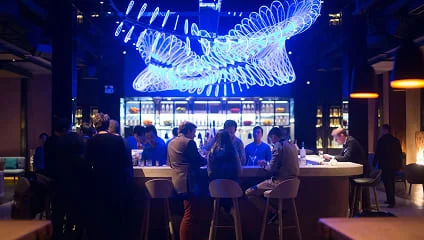
This article shares insights from Mr. Damian de Wind, Project Lighting Director at Mondoluce, about the journey of transforming retail lighting methods in the context of shopping centers adopting a customer-centric approach, focusing on people, their needs, and the overall experience.
Light plays a crucial role in creating engaging environments, enhancing our living experiences.
In recent years, the trend of owning vacation homes away from the hustle and bustle of urban life has become increasingly popular.