

Interior Showroom Lighting Design Guide | SVLight
Interior showroom lighting not only meets the needs of visibility and circulation but also helps highlight the shapes, colors, and materials of individual products. A well-planned lighting system can help customers clearly appreciate sofa upholstery, wood grain, stone surfaces, and important design details.
In particular, showrooms frequently change their displayed products according to new collections or marketing campaigns. Therefore, lighting solutions need to achieve two objectives: highlighting the products currently on display and allowing easy adjustments when the layout changes.
For architects and interior designers, lighting planning should begin with the floor plan, product categories, and customer journey. This article explains how to organize lighting layers, select track lights, and develop suitable lighting solutions for different showroom areas.
What Are the Key Objectives of Interior Showroom Lighting?
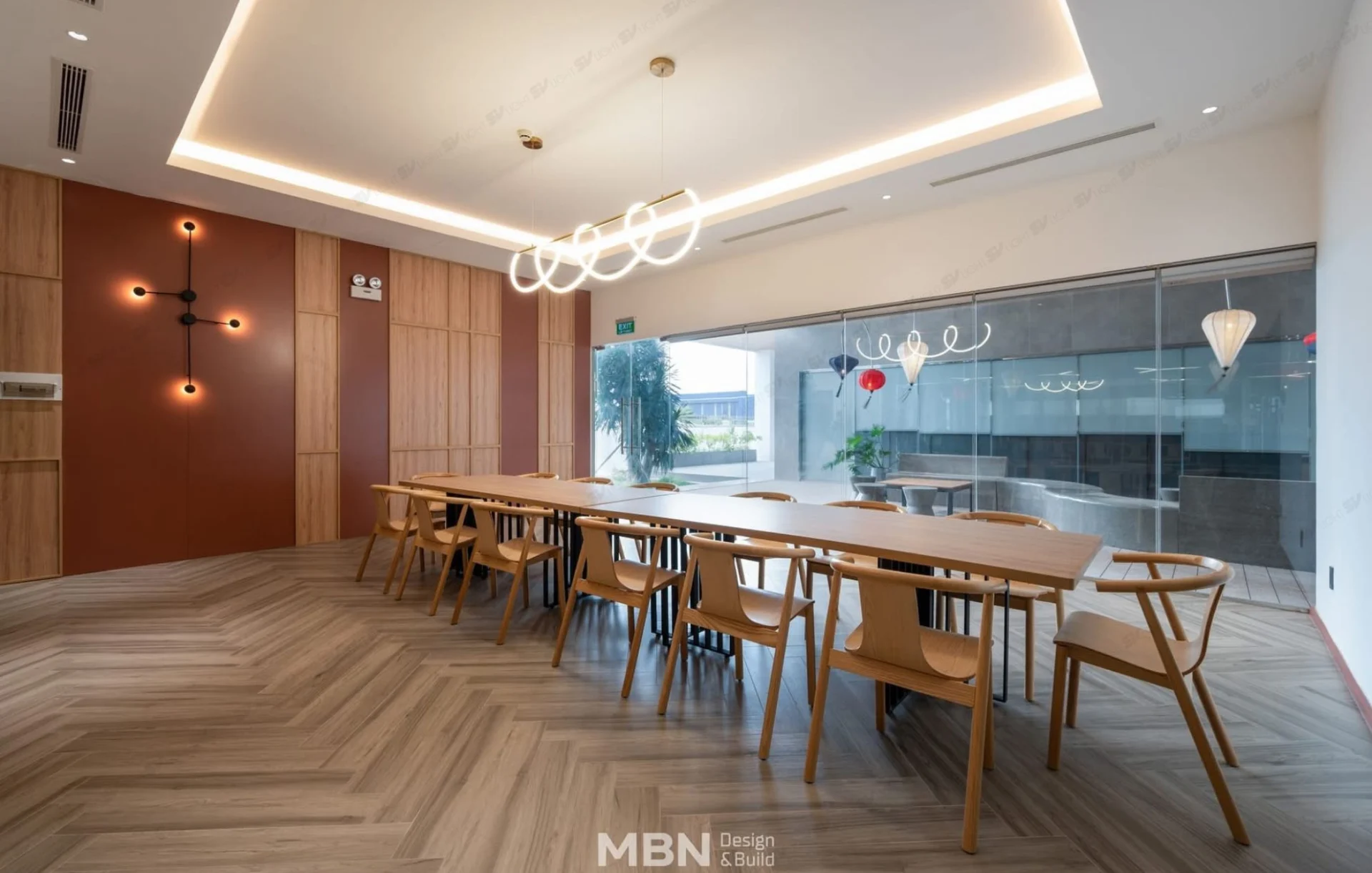
A well-designed showroom should balance product visibility, aesthetic experience, and operational flexibility. Lighting should not be distributed uniformly without consideration; instead, it should be organized according to the characteristics of each area.
Accurately Presenting Colors and Material Surfaces
Color and material quality are important factors in furniture purchasing decisions. When customers examine a sofa, stone tabletop, or wood sample, the lighting should help reveal its colors and surface characteristics according to the design requirements.
The Color Rendering Index (CRI), Correlated Color Temperature (CCT), and optical quality of luminaires all influence the viewing experience. For material display areas featuring multiple color variations, architects should consider high-CRI light sources and conduct practical sample testing before finalizing the lighting configuration.
For example, 3000K lighting generally creates a warmer appearance, while 4000K lighting is perceived as more neutral. However, no single color temperature should automatically be considered suitable for every type of wood, stone, or fabric. The results should be evaluated using actual material samples.
Creating Visual Highlights and Guiding Attention
Not every product in a showroom needs to be illuminated at the same intensity. Featured collections, newly introduced displays, and products with distinctive designs should receive accent lighting to attract attention.
A deliberate combination of brighter and darker areas helps establish a visual hierarchy. Accent lighting can guide customers toward featured products, while ambient lighting supports circulation and overall spatial awareness.
In showrooms with multiple functional zones, lighting can also help distinguish sofa displays, dining furniture, decorative cabinets, and consultation areas without requiring excessive partitions.
Adapting to Changes in Displayed Products
Layout flexibility is an important characteristic of interior showrooms. An area displaying sofas today may be used for dining tables or a new collection in the future.
If only fixed recessed downlights are used, the illuminated areas may no longer align with the products after they are repositioned. Therefore, track lighting for interior showrooms is worth considering in areas that require frequent adjustments.
Track systems allow luminaires to be repositioned within the system’s design limits while enabling their aiming direction to be adjusted toward newly displayed products. However, areas with relatively stable layouts can still use recessed downlights to maintain a clean ceiling design and optimize the initial lighting investment.
Organizing Lighting Layers in an Interior Showroom
For effective interior showroom lighting, architects should divide the lighting system into layers with clearly defined functions. Three commonly considered categories are ambient lighting, product accent lighting, and lighting for consultation or customer experience areas.
| Lighting Layer | Function | Recommended Luminaire Types |
|---|---|---|
| Ambient Lighting | Supports circulation and overall visibility | Downlights, linear lights |
| Accent Lighting | Highlights products and materials | Spotlights, track lights |
| Consultation and Experience Lighting | Supports material examination, drawing review, and consultation | Task lighting, ambient lighting |
Ambient Lighting and Circulation Areas
Ambient lighting helps customers move safely and understand the overall showroom layout. This lighting layer should provide stable illumination while avoiding unnecessary dark areas or uncomfortable glare along walkways.
Depending on the interior design style, architects may select recessed downlights, linear lighting, or indirect lighting systems. For showrooms with fixed circulation routes, downlights are worth considering because of their compact design and ability to complement other lighting layers.
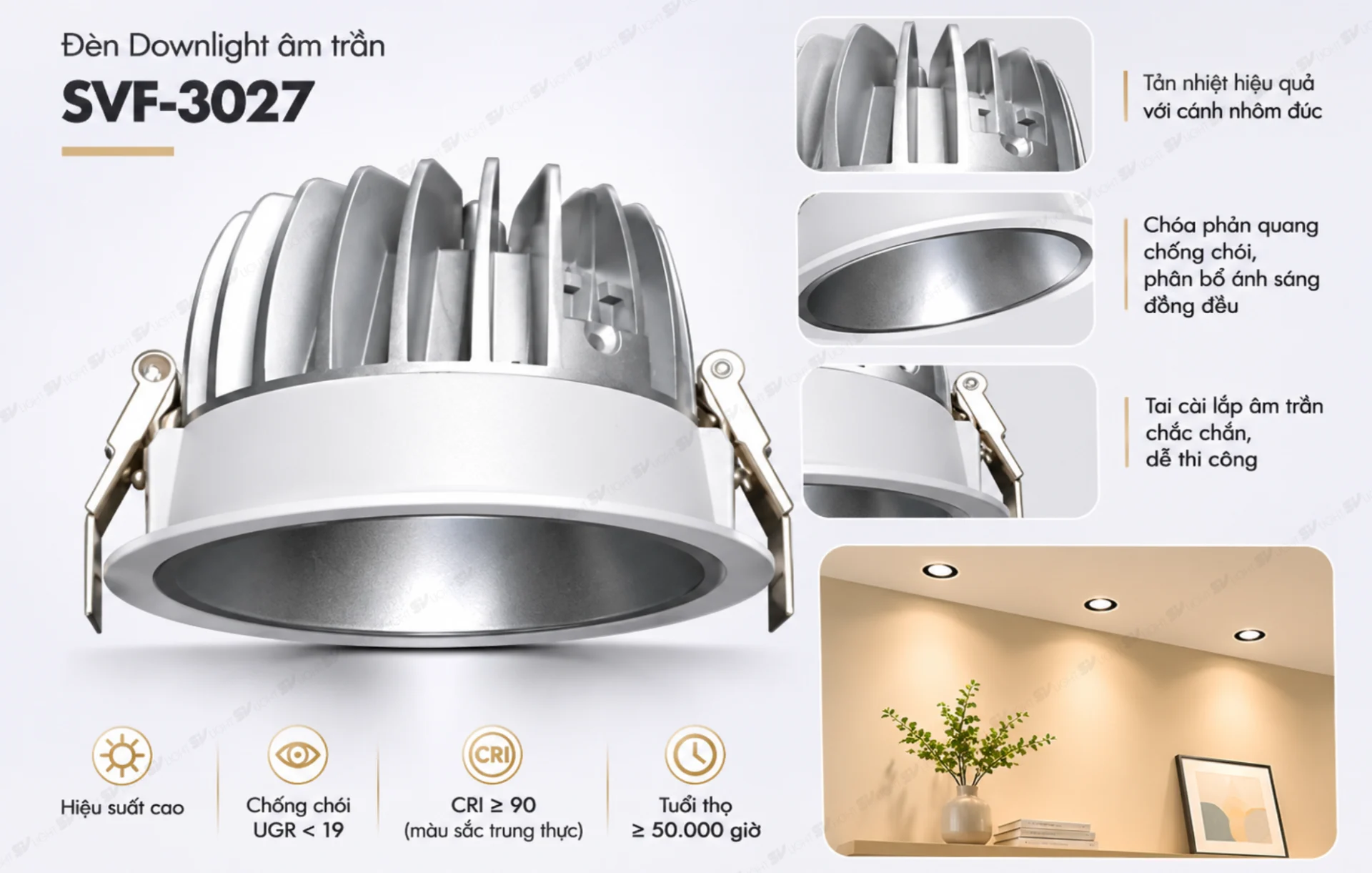
Within the SVLight product range, the SVF-3027 Downlight features a 10W power rating, a 90° beam angle, and a published color rendering index above Ra 90. This model may be considered for ambient lighting areas after evaluating the required illuminance and number of luminaires according to the floor plan.
Spotlights for Product Display Lighting
Spotlights for product displays concentrate light on products or details that need emphasis. Compared with ambient lighting, spotlights help create contrast and highlight the shapes and material characteristics of displayed objects.
The beam angle should be selected according to product dimensions and installation distance. Narrow beam angles are generally more suitable for emphasizing small details, while wider beam angles may be considered for larger surfaces or objects.
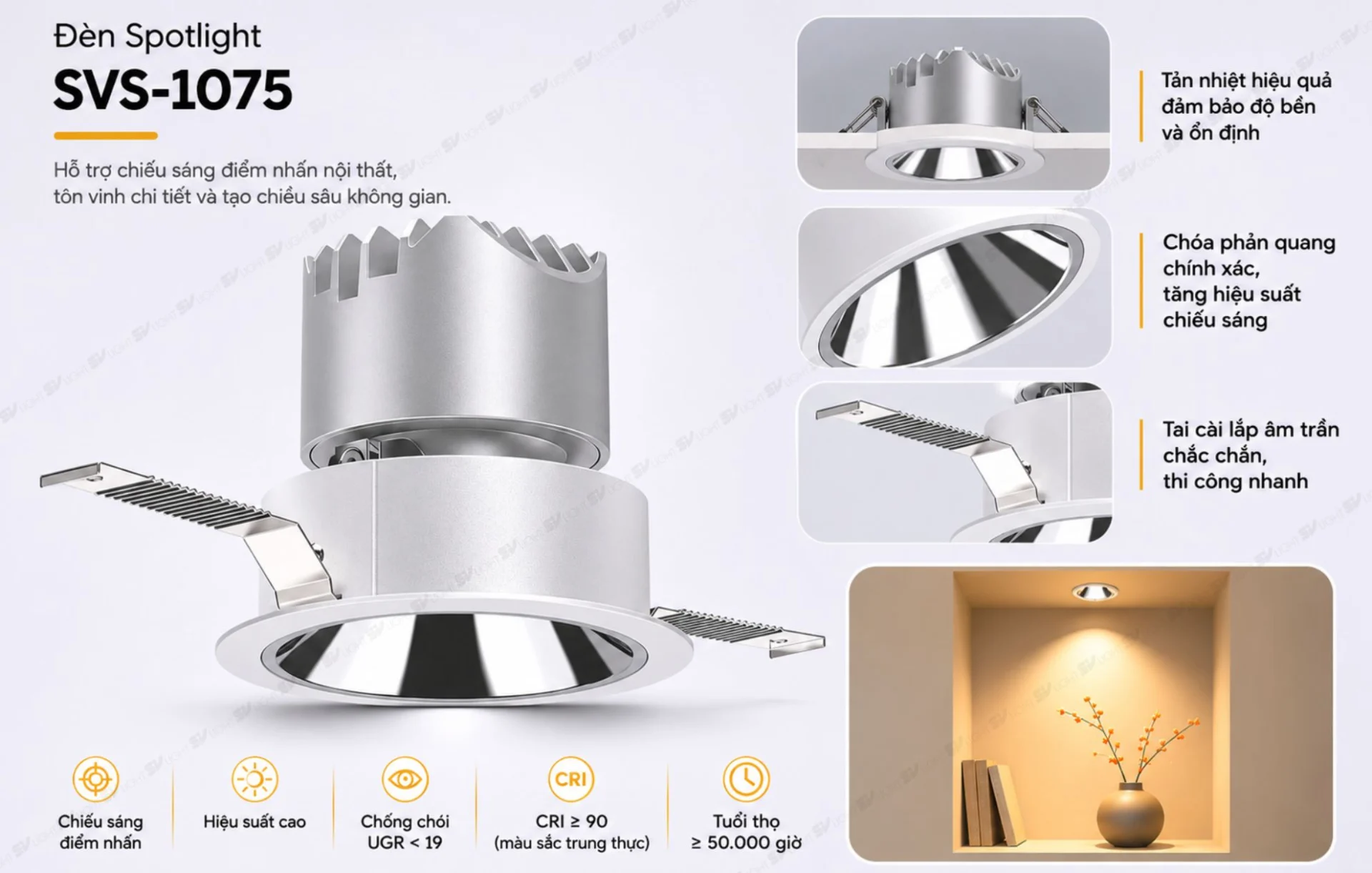
For fixed display areas, architects may consider the SVS-1075 Spotlight, available in 10W/12W configurations with beam angle options of 15°, 24°, 36°, and 55°, and a color rendering index of Ra 97.
However, for areas where displayed products change frequently, adjustable aiming mechanisms or track lighting should be considered to avoid repeatedly modifying a fixed ceiling lighting arrangement.
Lighting for Consultation and Customer Experience Areas
Consultation areas are where customers examine wood, stone, and fabric samples, select colors, and discuss drawings with interior designers. Therefore, lighting in these areas should provide clear visibility of details and visual comfort during discussions.
Using only narrow-beam spotlights directed at consultation tables is not recommended, as they may create hand shadows or unevenly illuminated areas. Instead, ambient lighting should be combined with suitable task lighting.
For showrooms with material sample boards, the color temperature and color rendering performance of luminaires should be controlled so customers can evaluate product colors more reliably. When comparing light sources, testing them on actual materials is generally more useful than viewing catalogue photographs.
How to Choose Track Lighting for Interior Showrooms
Track lighting is a suitable solution for display areas that require changes in luminaire position and aiming direction. When selecting track lighting for interior showrooms, architects should consider color rendering performance, color temperature, beam angle, glare control, and compatibility with the track system.
High-CRI Track Lighting for Showrooms
High-CRI track lighting for showrooms is often considered when accurate color presentation is important for sofas, fabrics, wood, stone, and other aesthetically demanding materials. The CRI/Ra value indicates how a light source renders colors compared with a reference illuminant under a defined measurement method.
Luminaires rated above Ra 90 or at Ra 97 may be shortlisted for material display areas. However, color temperature, spectral quality, and practical testing results on actual products should also be evaluated.
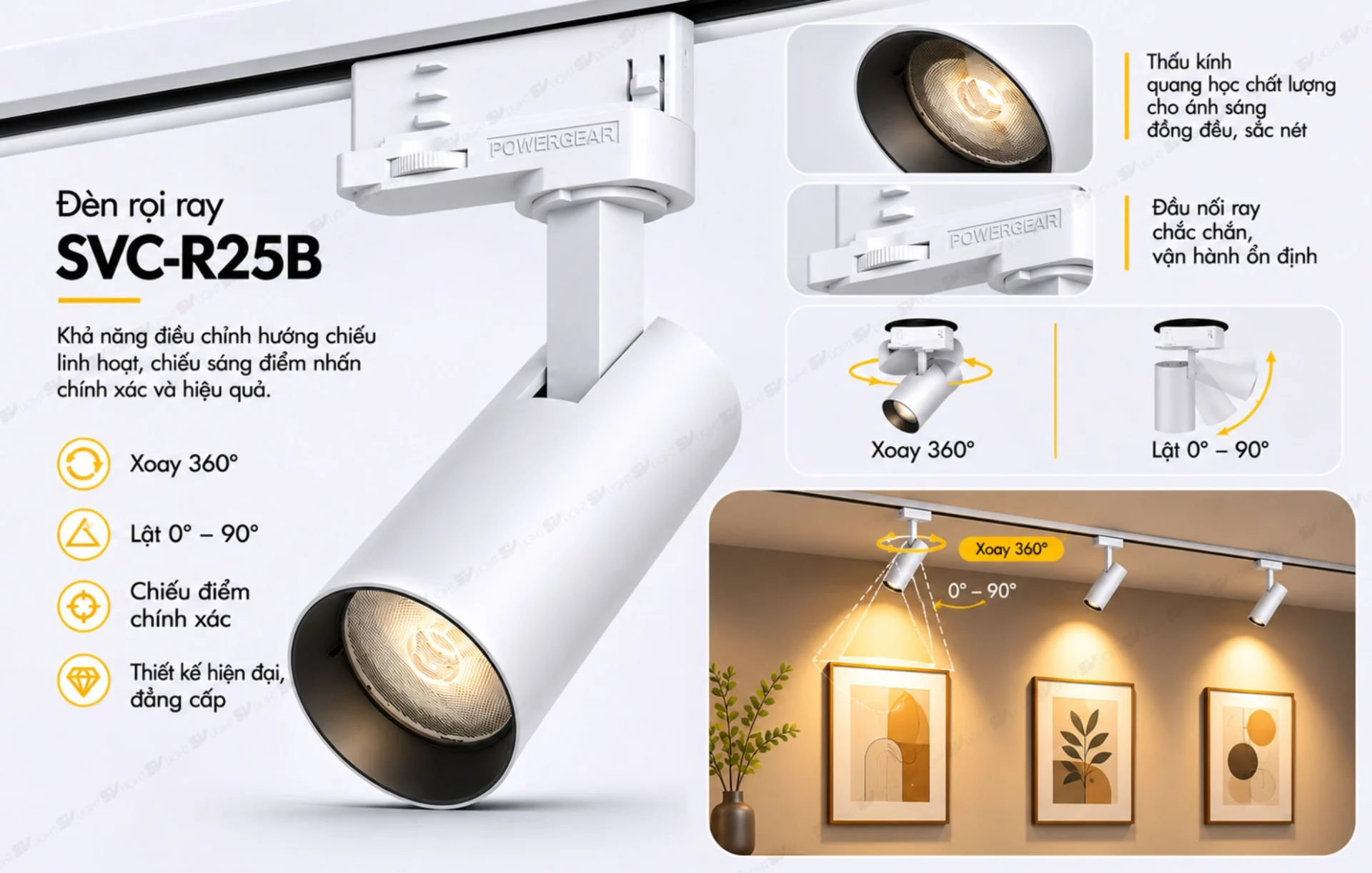
SVLight offers the SVC-R25B Track Light, rated at 25W, with published color rendering options above Ra 90 or at Ra 97 and beam angles of 15°, 24°, and 38°, depending on the configuration.
The luminaire features an adjustable head that allows its aiming direction to be changed, making it worth considering for areas displaying sofas, tables, chairs, or decorative products. Before ordering, the exact CRI version, color temperature, and compatible track system should be confirmed.
Selecting Color Temperature and Beam Angle
Color temperature influences the overall atmosphere of a space and the perceived appearance of materials. Lighting at 3000K generally creates a warmer impression, while 4000K produces a more neutral appearance. The selection should align with the brand’s visual identity and the product categories on display.
For interior showrooms featuring warm-toned wood, beige materials, and experience-oriented spaces, 3000K lighting may be tested. For areas displaying neutral materials or color sample boards, 4000K is another option worth evaluating.
Beam angles should be determined according to product dimensions, the distance between the luminaire and the object, and the intended lighting effect. If an excessively narrow beam is used for a large sofa, the illuminated area may cover only part of the product. Conversely, an overly wide beam may spill light into adjacent display areas.
Therefore, architects should combine luminaire photometric data with floor plans and practical testing before finalizing the lighting configuration.
Adjustable Beam Angle Track Lights and Directional Flexibility
When selecting adjustable beam angle track lights, it is important to distinguish between adjusting the aiming direction and changing the beam spread.
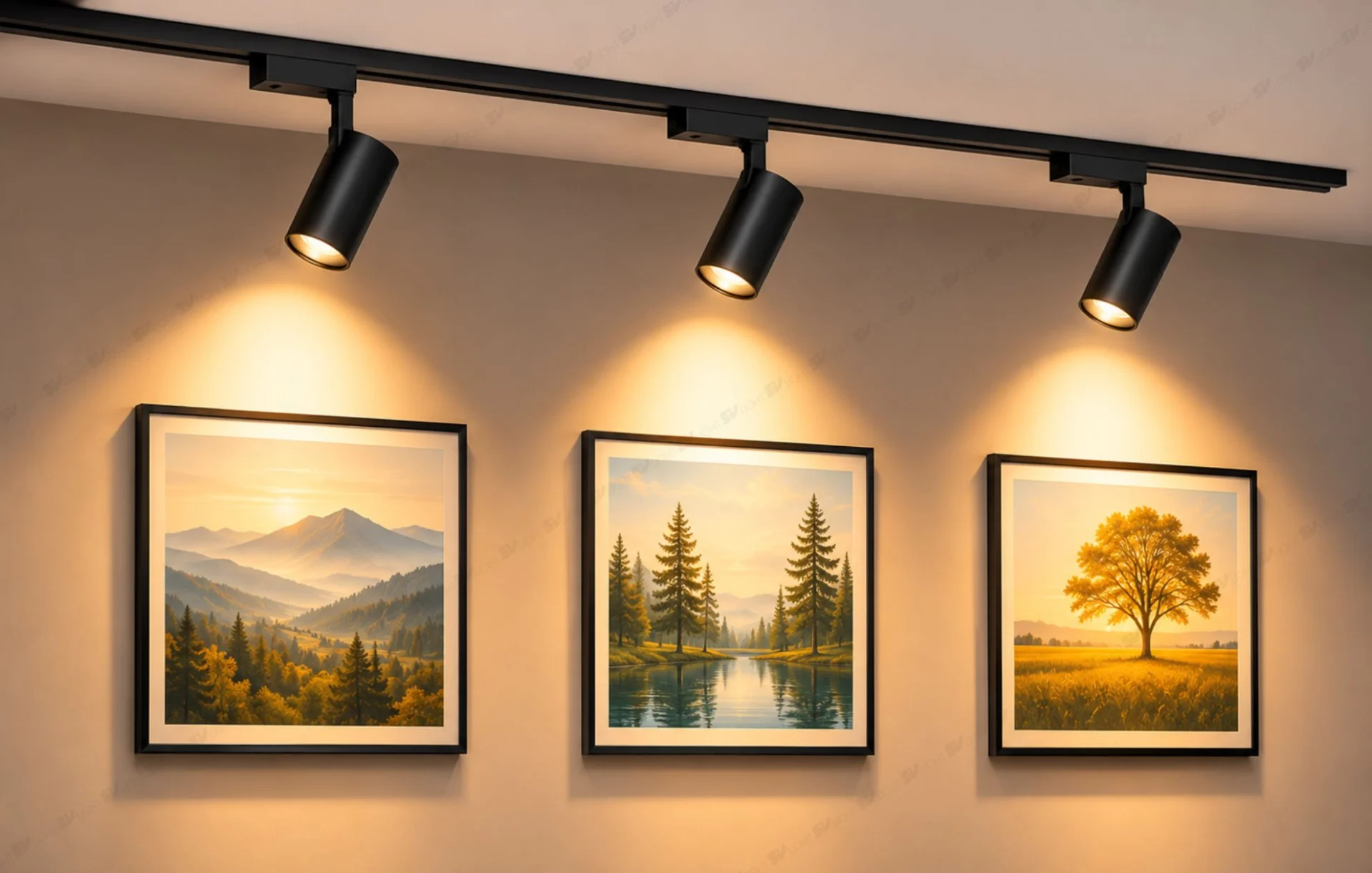
Adjusting the aiming direction involves rotating or tilting the luminaire head to direct light toward another position. Meanwhile, adjusting the beam angle changes the illuminated coverage from narrow to wide, or vice versa, depending on the luminaire’s optical mechanism.
The SVLight SVS-R25 Track Light has a 25W power rating and a zoom mechanism that allows the beam angle to be adjusted from 15° to 60°, according to its published specifications.
This adjustable beam coverage makes the product suitable for testing in areas where display sizes and positions change frequently. For example, when replacing a small decorative object with a larger product group, operators can adjust the aiming direction and beam coverage within the luminaire’s operating limits.
However, luminaire flexibility must be supported by a compatible track system. Architects should confirm the track type, adapter, connection accessories, power supply, and control method before installation.
Track Lighting Layouts for Different Product Display Areas
Track lighting layouts for display areas should be based on the dimensions, material characteristics, and viewing positions of each product category. Luminaires should not simply be spaced evenly along the track without considering actual lighting requirements.
Sofa, Furniture, and Material Display Areas
Lighting for sofas and interior materials should help customers clearly observe product colors, surface textures, and shapes. For large sofas, the illuminated coverage across the entire product should be checked to avoid excessive concentration of light in one area.
Multiple luminaires with suitable beam angles can be combined to create balanced illumination. However, overlapping beams should be evaluated to minimize excessively bright spots or unwanted dark areas.
For wooden furniture and stone tabletops, the aiming direction should help reveal grain patterns, craftsmanship, and material characteristics. Glossy surfaces should be evaluated from the positions where customers typically stand or sit to minimize distracting reflections and glare.
Cabinets, Shelving, and Decorative Display Areas
Display cabinets and shelving units often contain multiple levels, small objects, and varying depths. When positioning luminaires, attention should be paid to the aiming direction to prevent upper shelves from casting shadows over products displayed below.
For small decorative objects, narrow beams can help create visual accents. Meanwhile, larger shelving areas may require a combination of spot lighting, vertical surface illumination, or integrated shelf lighting.
For areas where decorative items change frequently, track lighting can help adjust illuminated areas without modifying the entire ceiling layout. The aiming direction should be checked after each display change to maintain lighting effectiveness.
Areas Requiring Reflection and Glare Control
Glass, mirrors, polished stone, metal, and certain glossy materials can reflect light toward viewers’ eyes. If the aiming direction is unsuitable, customers may see reflected images of the luminaires instead of product details.
During the design process, the positions where customers typically stand, test sofas, or examine material samples should be identified. Glare and reflections should then be evaluated from these positions so the aiming direction can be adjusted accordingly.
For highly reflective surfaces, repositioning luminaires, adjusting beam coverage, or selecting compatible glare-control accessories may be considered. Simply increasing or decreasing power without addressing the cause of reflections is not recommended.
Developing Showroom Lighting Solutions Based on Floor Plans
A suitable showroom lighting solution should be developed based on architectural drawings, ceiling characteristics, and operational requirements. In addition to highlighting currently displayed products, the design should account for lighting adjustments when collections change.
Preparing Floor Plans and Identifying Frequently Changing Display Areas
For track lighting consultation based on interior design drawings, floor plans, sections, ceiling heights, product layouts, and proposed electrical supply locations should be prepared. For operating showrooms, photographs of existing conditions and information about the current lighting system should also be provided.
Architects can divide the floor plan into three categories: fixed display areas, flexible display areas, and consultation areas. Locations where sofas, tables, chairs, or collections change frequently should prioritize solutions that allow adjustments to aiming direction and beam coverage.
Conversely, circulation routes, reception counters, and fixed consultation tables can use stable ambient lighting. This classification helps avoid installing excessive track lighting in areas that do not actually require flexibility.
For showroom lighting renovation projects, existing track systems, power supplies, and control methods should be surveyed before proposing equipment replacements or additions. New luminaires should not automatically be assumed compatible with every existing track system.
Testing Samples and Lighting Proposals Before Installation
After completing the preliminary lighting proposal, sample testing should be conducted in the showroom or a representative area. This is an important step for evaluating beam coverage, glare, and color appearance on actual products.
For sofa display areas, the illuminated coverage across the products should be evaluated. For material display areas, color temperature, CRI, and the perceived colors of wood, stone, and fabrics should be compared. For cabinets and shelving, shadows and illumination across different shelf levels should be assessed.
For showrooms expected to change their layouts frequently, at least two display arrangements should be tested. This helps determine whether the track system and luminaires provide sufficient adjustment flexibility.
Interior Showroom Lighting Implementation Checklist
- Prepare floor plans, sections, and ceiling heights.
- Identify fixed and flexible display areas.
- Organize ambient lighting, accent lighting, and consultation lighting.
- Select luminaires based on CCT, CRI, beam angle, and glare-control requirements.
- Confirm luminaire models, track systems, accessories, and control methods.
- Test lighting on sofas, wood, stone, fabrics, and actual products.
- Evaluate adjustment flexibility when display layouts change.
- Document approved configurations and positions for installation and final inspection.
Interior showroom lighting should be considered an integral part of spatial design and the customer experience. An appropriate lighting system not only highlights product colors, shapes, and materials but also helps organize display areas clearly.
For showrooms that frequently change their collections, track lighting with adjustable aiming directions and beam coverage is worth considering. However, the final selection should still be based on architectural drawings, operational requirements, equipment configurations, and practical testing results.
Showroom Lighting Design Consultation with SVLight
SVLight offers spotlights, downlights, and track lighting products for interior lighting design. For new showrooms or renovation projects, architects and project owners can prepare architectural drawings, photographs of existing conditions, product categories, and planned layout changes to discuss suitable lighting solutions.
Explore SVLight’s track lighting range or contact SVLight for interior lighting design consultation.
SUNSHINE VIETNAM TRADING JOINT STOCK COMPANY
Branch 1: No. 08, B4 Street, An Khanh Ward, Ho Chi Minh City, Vietnam
Branch 2: No. 116 Truong Chinh Street, Kim Lien Ward, Hanoi, Vietnam
Hotline: 0985 85 86 98
Email: svlight.vn@gmail.com
Website: svlight.vn
Fanpage 1: SVLight
Fanpage 2: SVLight Ho Chi Minh City
Other News
Trimmed and trimless recessed lights are two options commonly considered by architects when designing interior lighting. While trimmed recessed lights create a defined edge where the fixture meets the ceiling, trimless recessed lights provide a seamless, minimalist appearance by reducing visible technical details on the architectural surface. However, choosing between these two types of lighting […]
How to position artwork lighting directly affects how clearly artwork can be viewed and how an interior space is perceived. A beautiful painting can become a focal point in a villa living room, hotel corridor, or exhibition area. However, if the lighting position is unsuitable, it may cast shadows from the frame, create uneven illumination, […]
Color Rendering Index (CRI) is one of the important specifications to consider when selecting LED lighting for interior spaces, especially in areas where accurate color appearance is essential, such as artwork, wooden wall panels, natural stone, fabrics, and displayed products. Even a well-designed interior featuring beautiful materials and a carefully planned lighting layout may fail […]
3000K and 4000K lighting are two popular color temperature options in interior lighting design. While 3000K generally produces a warm white appearance, 4000K provides a more neutral white light. However, choosing between these two color temperatures is not simply a matter of deciding between yellowish and white light. It also requires careful consideration of functionality, […]
Spotlight beam angle determines the spread of a light beam and affects the illuminated area on artwork, decorative objects, interior shelves, and display spaces. At the same installation distance, a 15° beam angle can produce a significantly smaller illuminated area than a 36° or 55° beam angle. Therefore, selecting the right spotlight should begin with […]
Downlights and spotlights are widely used in interior lighting, but they typically serve different purposes. Downlights provide a base layer of illumination, while spotlights draw attention to artwork, materials and architectural features. This guide focuses on recessed ceiling fittings: both can sit within the same ceiling design, yet their contribution to the room depends on […]
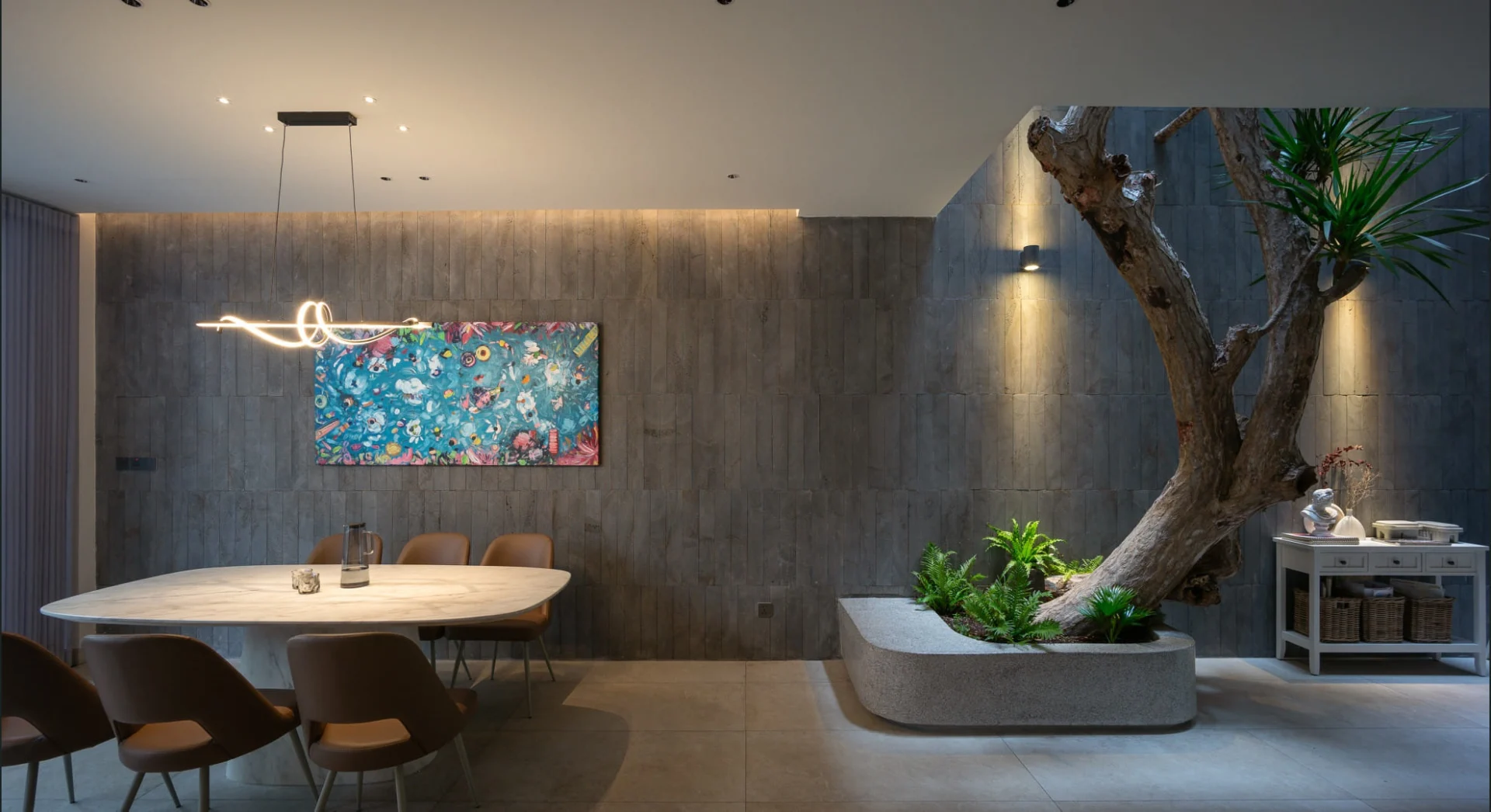
In interior design, lighting is more than just a tool that helps us see. It is a “language of emotion” — quietly shaping mood, perception, and the overall quality of human experience in every moment. Among all lighting specifications, CCT (Correlated Color Temperature) and CRI (Color Rendering Index) are the two core factors that determine […]

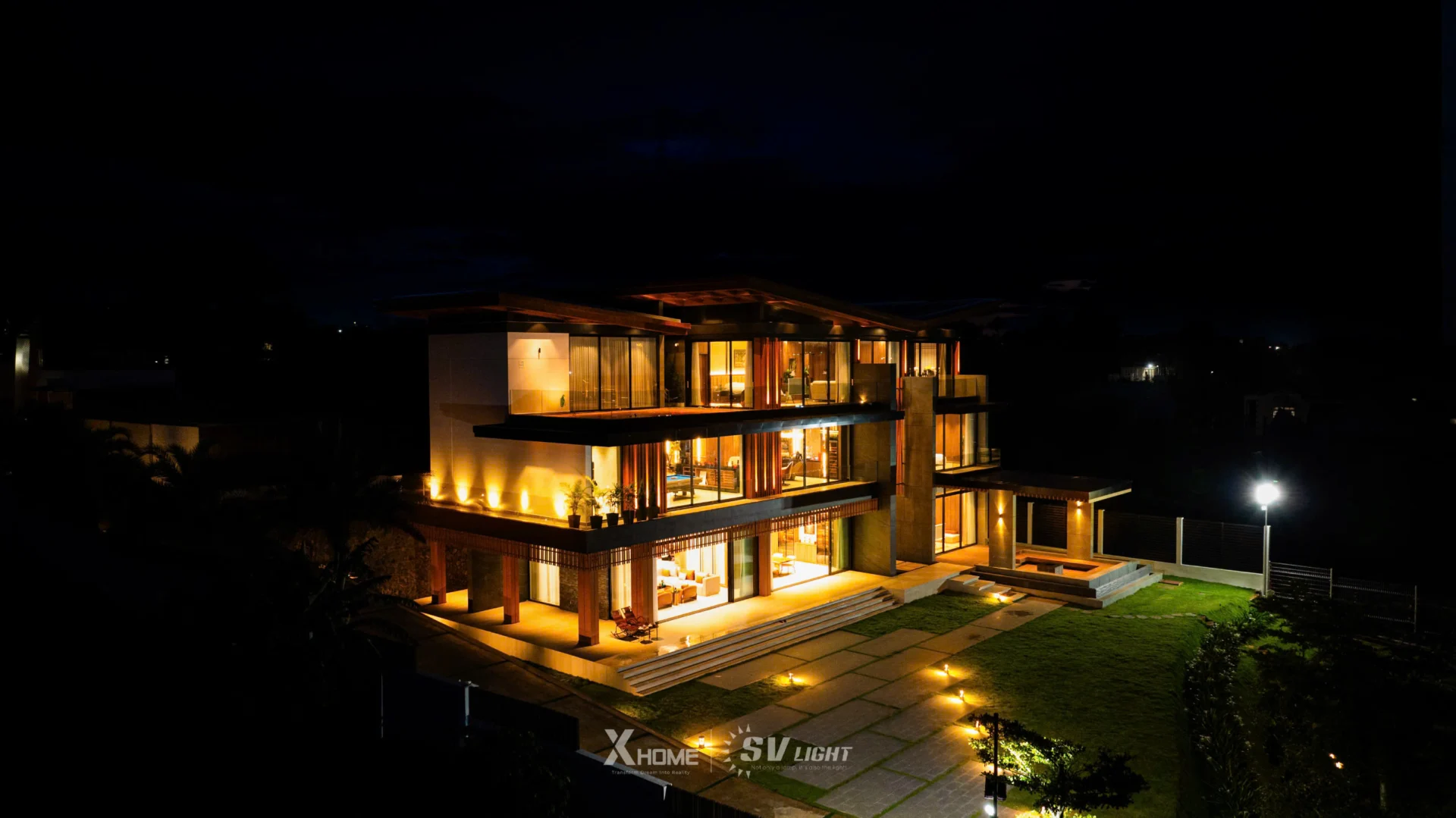
Những năm gần đây, xu hướng sở hữu nhà ở nghỉ dưỡng tránh xa ồn ào nơi phố thị đang ngày càng được ưa chuộng.
In recent years, the trend of owning vacation homes away from the hustle and bustle of the city has become increasingly popular.
This article shares insights from Mr. Damian de Wind, Project Lighting Director at Mondoluce, about the journey of transforming retail lighting methods in the context of shopping centers adopting a customer-centric approach, focusing on people, their needs, and the overall experience.
Light plays a crucial role in creating engaging environments, enhancing our living experiences.
In recent years, the trend of owning vacation homes away from the hustle and bustle of urban life has become increasingly popular.